
Your healthcare provider just mentioned scheduling a non-stress test, and you’re wondering what that means. Or maybe you’re reading through your pregnancy checklist and saw “NST” and thought, “Wait, what’s that?”
Don’t worry—a non-stress test (or NST) is one of those pregnancy terms that sounds more intimidating than it actually is. Let’s walk through what it is, why you might have one, and what to expect.
What Is a Non-Stress Test?
A non-stress test is a simple, painless way for your healthcare provider to check on your baby’s well-being during pregnancy. Despite the name, it has nothing to do with stress—in fact, it’s called “non-stress” because it doesn’t put any stress on you or your baby. You just rest while the test monitors your baby’s heart rate.
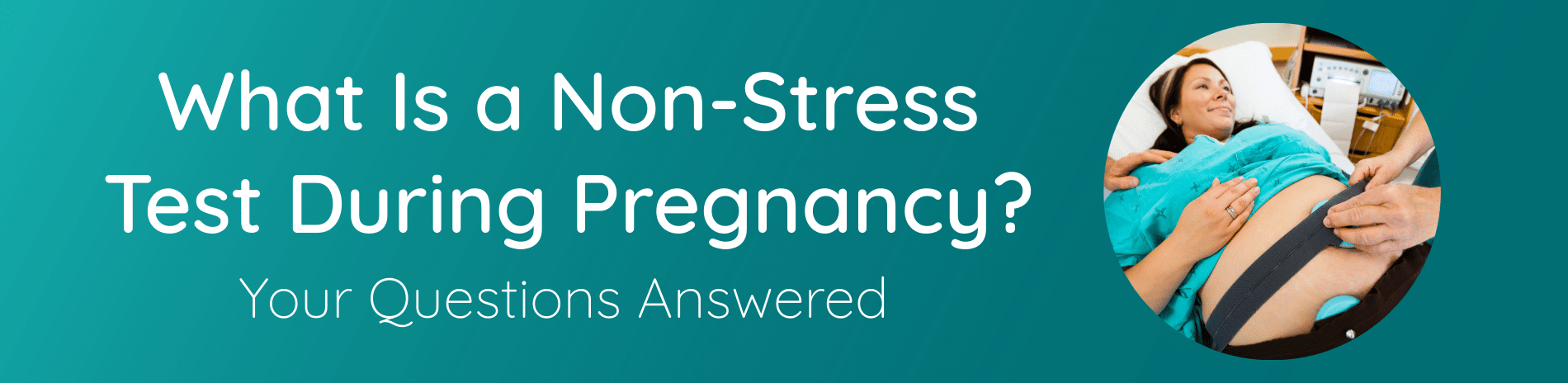
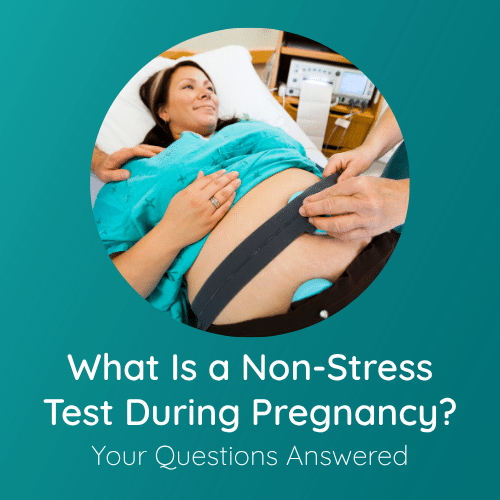
Here’s how it works: Your provider will place two belts around your belly—one measures your baby’s heart rate, and the other tracks any contractions you might be having. Then you’ll sit or lie back comfortably for about 20-30 minutes while the monitor does its thing.
What the test is looking for: When your baby moves, their heart rate should speed up a little—just like your heart rate goes up when you exercise. This is a healthy sign that your baby is getting enough oxygen and doing well.
When Might I Need a Non-Stress Test?
Non-stress tests are most common after 28 weeks of pregnancy, when your baby’s heart rate patterns become more developed. Not everyone has a non-stress test during pregnancy—they’re typically recommended when your healthcare provider wants extra monitoring for specific reasons.
You might have an NST if:
- Your pregnancy is considered high-risk due to conditions like gestational diabetes, high blood pressure, or preeclampsia
- You’re past your estimated due date (usually 41 weeks or beyond)
- You’ve noticed your baby isn’t moving as much as usual
- You’re carrying multiples (twins, triplets, or more)
- You had complications in a previous pregnancy
- Your provider has concerns about your baby’s growth or your amniotic fluid levels
- You have certain health conditions like heart disease or a clotting disorder
- There’s Rh incompatibility between you and your baby
Some healthcare providers routinely schedule non-stress tests for anyone past 40 weeks, while others only order them when there’s a specific concern. Your provider will let you know if and when you need one based on your unique pregnancy.
What Happens During the Test?
Non-stress tests are really straightforward and completely safe. Here’s what to expect:
Before you go: Some providers suggest eating a snack or drinking something sweet about 30 minutes before your test. This can help get your baby moving.
During the test: You’ll sit in a reclining chair or lie on an exam table—whatever’s most comfortable for you. A technician or nurse will place two monitors on your belly using elastic belts. One tracks your baby’s heartbeat, and the other picks up any uterine contractions. You’ll hear your baby’s heartbeat through the monitor (which many parents find really reassuring).
You might be given a button to press every time you feel your baby move, though some monitors track movement automatically. The whole thing usually takes 20-30 minutes, though sometimes it might take longer if your baby is sleeping.
What you can do: Bring something to keep you occupied—a book, your phone, or a podcast. Some people bring their partner or support person.
What Do the Results Mean?
Your healthcare provider will review the results, which typically fall into two categories:
Reactive (or “Reassuring”): This is the result you’re hoping for. It means your baby’s heart rate went up at least twice during the test period when your baby moved. This shows your baby is getting enough oxygen and is doing well. (Like many tests, the non-stress test is not considered 100% accurate and is not a complete guarantee. However, providers consider this result highly reassuring.)
Non-reactive: This means your baby’s heart rate didn’t increase as expected, or your baby wasn’t moving much during the test. Now, before you worry—a non-reactive result doesn’t automatically mean something is wrong. Your baby might have just been sleeping, or the timing wasn’t right.
What happens if the result is non-reactive: Your provider might try a few things to wake your baby up, like using a gentle buzzer device on your belly or asking you to eat or drink something. They might also have you stay for an extended monitoring session. Sometimes they’ll recommend additional testing. Your provider will explain your results and what they mean for your specific situation.
Is a Non-Stress Test Safe?
Yes, absolutely. Non-stress tests are completely safe for both you and your baby. They’re non-invasive (nothing goes inside your body), and the monitors only listen to and record information—they don’t send anything into your body. There are no known risks or side effects.
The only “downside” is the time commitment and the possibility that a non-reactive result might cause some anxiety, even though it often doesn’t mean anything serious.
Questions to Ask Your Provider
If your provider recommends a non-stress test, here are some helpful questions:
- Why are you recommending this test for my pregnancy?
- When should I schedule it?
- How should I prepare?
- How long will it take?
- When will I get the results?
- What happens if the results are non-reactive?
- Will I need more than one test?
Remember, questions are always welcome. Your healthcare team wants you to understand what’s happening and feel confident in your care.
The Bottom Line
A non-stress test is a safe, simple way for your healthcare provider to check on your baby’s well-being, especially if there’s a reason for extra monitoring. Most results are reassuring, and even non-reactive results often turn out to be nothing serious after additional testing.
If you’re scheduled for an NST, try not to stress (ironic, right?). Think of it as a chance to hear your baby’s heartbeat and get some quiet time to connect with your little one. Bring a snack, bring your partner, and know that this is all part of making sure you and your baby are healthy and thriving.
You’re doing an amazing job taking care of yourself and your baby. Every appointment, every test, every question you ask—it all matters.
Need Support For Pregnancy and Birth?
A doula can help—and you may qualify for free.
A doula is a trusted support person you can talk with about pregnancy questions. They can also help you prepare for your birth, support you during your labor and delivery, and help you once you are home with your new baby.
If you live in Linn, Benton, Lincoln, Lane, Marion, or Polk counties and have Medicaid/OHP, you are eligible for free doula care through the Community Doula Program.
April 11, 2026
Explore the Blog

Diaper Need: A Serious Issue—And a Local Solution

Why Choose a Community Doula?

How Many Ultrasounds Should I Have During Pregnancy?
Explore the Blog
Diaper Need: A Serious Issue—And a Local Solution
Why Choose a Community Doula?