
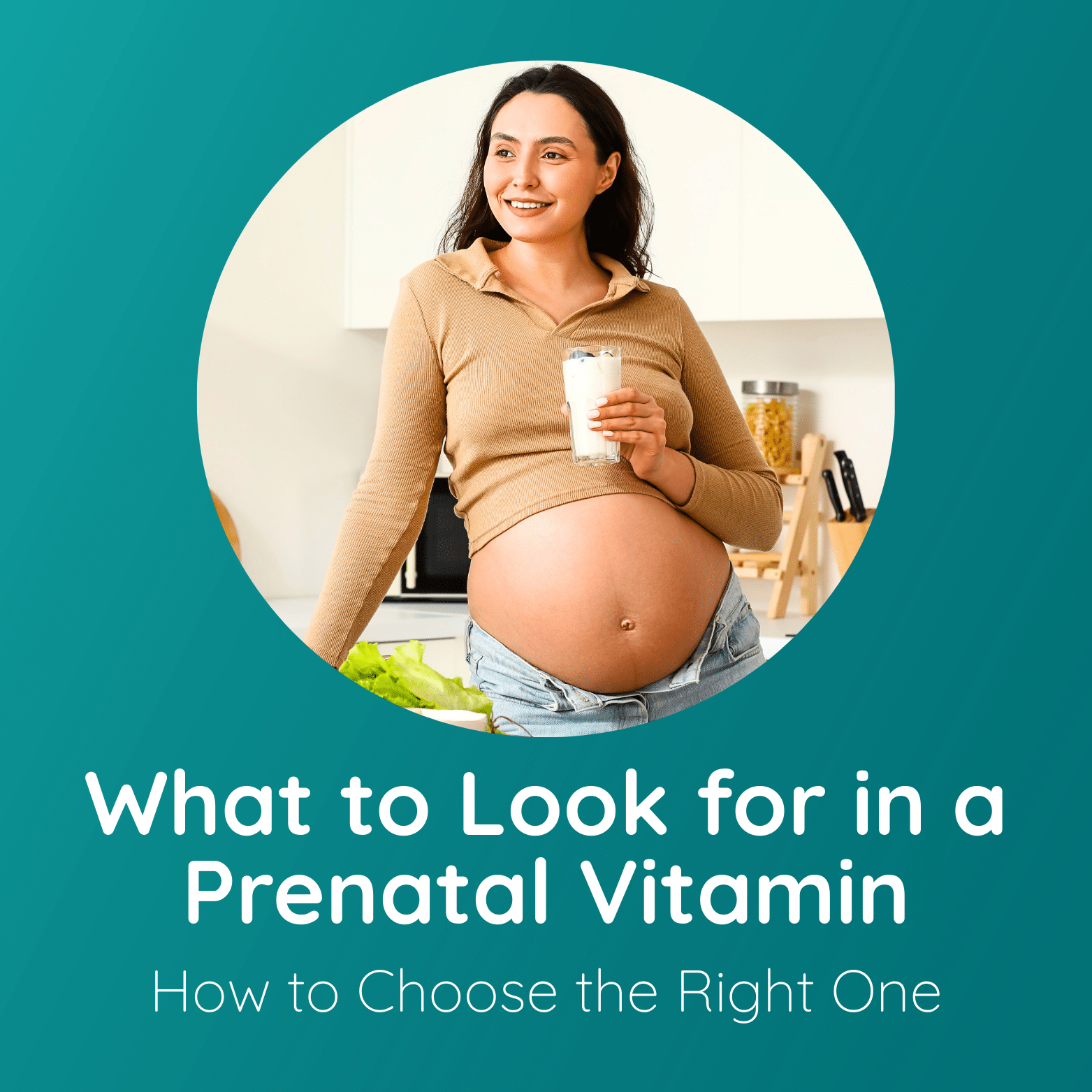
Standing in the vitamin aisle staring at rows and rows of prenatal vitamins can feel totally overwhelming. Should you grab the most expensive one? What should you look for on the label? And what do all these numbers even mean?
Take a deep breath—you’ve got this! Choosing a prenatal vitamin doesn’t have to be complicated. Let’s walk through what really matters so you can feel confident about your choice.
The Must-Have Nutrients (Your Quick Checklist)
When you flip that bottle around to read the label, here’s what you’re looking for. These are the five key nutrients that are most important for a healthy pregnancy:
1. Folic Acid (or Folate): At Least 400 mcg
This is the most important one. Folic acid helps prevent serious birth defects in your baby’s brain and spine, especially in the first few weeks of pregnancy—often before you even know you’re pregnant. That’s why it’s recommended to start taking it before you conceive if possible.
What to look for: “Folic acid” or “folate” on the label. Aim for at least 400 micrograms (mcg), but many prenatals contain 600-800 mcg, which is great. Some brands use “methylfolate” or “L-methylfolate,” which is the natural form and can be easier for some people to absorb.
2. Iron: 27 mg
Your body needs extra iron during pregnancy to make more blood for you and your baby. Without enough iron, you might feel exhausted or develop anemia.
What to look for: 27 milligrams (mg) of iron. Some gummy vitamins don’t contain iron, so check the label carefully.
Quick note: Iron can sometimes cause constipation or an upset stomach. If that happens, try taking it with food or talk to your healthcare provider about alternatives.
3. Vitamin D: 600-800 IU
Vitamin D supports your baby’s bone development and helps your body absorb calcium. Many pregnant people don’t get enough vitamin D, especially in the winter months.
What to look for: At least 600 IU (International Units), though 800-1000 IU is even better. Some research suggests higher amounts may be beneficial, but check with your provider.
4. DHA (Omega-3): 200-300 mg
DHA is an omega-3 fatty acid that’s important for your baby’s brain and eye development. It’s found in fish, but not all prenatal vitamins include it.
What to look for: DHA—at least 200 mg.
5. Iodine: 150 mcg
Iodine supports your baby’s brain development and helps your thyroid work properly. Not all prenatal vitamins include iodine, so it’s worth checking.
What to look for: 150 micrograms (mcg) of iodine.
How to Read the Label
The “Supplement Facts” label on the back of the bottle is where you’ll find all the important info. Here’s how to decode it:
- Look for the amounts: Each nutrient will list the amount per serving. Make sure folic acid, iron, vitamin D, and the others are close to the numbers we mentioned above.
- Check the serving size: Some prenatals require you to take multiple pills per day to get the full dose. If you prefer just one pill, look for a “once daily” formula.
- Forms matter for some nutrients: If you see “methylfolate” instead of “folic acid,” that’s actually a good thing—it’s easier for many people to absorb. For iron, look for “ferrous” forms (like ferrous sulfate or ferrous fumarate), which are well-absorbed.
Your Questions Answered
Does More Expensive Mean Better?
Not necessarily! The most important thing is that your prenatal contains the key nutrients in the right amounts. Some pricier brands use more easily absorbed forms of certain vitamins (like methylfolate), which can be worth it for some people. But plenty of affordable store-brand prenatals have everything you need. Compare the labels and choose what fits your budget—what matters most is that you take it consistently.
Gummy Vitamins vs. Pills—What’s the Difference?
Gummy vitamins can be easier to take if you struggle with swallowing pills or if regular prenatals make you nauseous. However, many gummy vitamins don’t contain iron (and sometimes other key nutrients) because it’s hard to make them shelf-stable in gummy form. If you choose gummies, check the label carefully and consider whether you need a separate iron supplement.
Do I Need a Prescription Prenatal, or Can I Buy One Over-the-Counter?
Over-the-counter prenatals are perfectly fine for most people! Prescription prenatals might have higher doses of certain nutrients or different forms that are easier to absorb, and some insurance plans cover them. But if you’re buying your prenatal at the drugstore or grocery store, you’re doing great—just make sure it has the key nutrients listed above.
A Few Final Tips
- Start before you’re pregnant if possible: Ideally, begin taking a prenatal vitamin with folic acid at least a month before you start trying to conceive. Your baby’s neural tube develops in the first few weeks of pregnancy, often before you know you’re expecting.
- Take it at the same time every day: Whether it’s with breakfast or before bed, pick a time that works for you and stick with it. Consistency is key!
- It’s okay to switch: If one brand makes you feel nauseous or causes other side effects, try another. There’s no harm in switching prenatals.
- Talk to your healthcare provider: If you have specific health concerns, dietary restrictions, or you’re not sure which prenatal is right for you, your doctor or midwife can help guide you.
The Bottom Line
Choosing a prenatal vitamin doesn’t have to be stressful. Look for one that has the five key nutrients—folic acid, iron, vitamin D, DHA, and iodine—in the amounts we’ve talked about. Read the label, pick something that fits your budget, and remember: the best prenatal vitamin is the one you’ll actually take every day.
You’re taking great care of yourself and your baby. That’s something to feel really good about!
Need Support For Pregnancy and Birth? A doula can help—and you may qualify for free.
A doula is a trusted support person you can talk with about pregnancy questions. They can also help you prepare for your birth, support you during your labor and delivery, and help you once you are home with your new baby.
If you live in Linn, Benton, Lincoln, Lane, Marion, or Polk counties and have Medicaid/OHP, you are eligible for free doula care through the Community Doula Program.
February 9, 2026
Explore the Blog

How Many Ultrasounds Should I Have During Pregnancy?
Explore the Blog